July 2026

How to Spot a Dolphin

How to Spot a Dolphin Before Everyone Else on the Boat

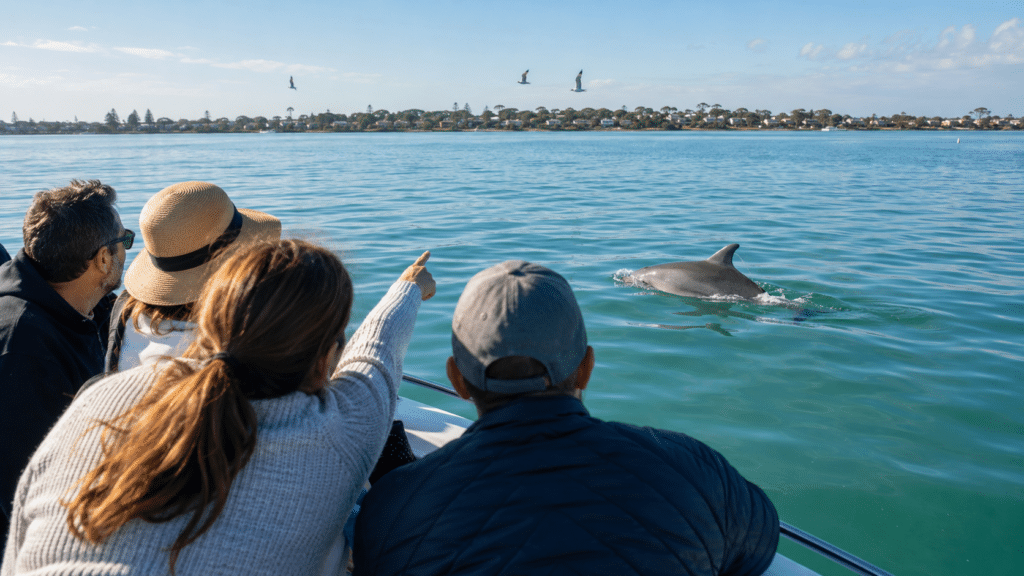
There is something exciting about being the first person on a boat to call out, “Dolphin!” Mandurah’s waterways are home to wild dolphins that can appear when you least expect them. Sometimes they announce themselves with a noticeable splash, while at other times the only clue is a small fin briefly breaking the surface. Spotting dolphins takes patience, concentration and a little knowledge of what to look for. While there is never a guaranteed trick for finding wild animals, the following tips can help you notice the signs sooner during your next Mandurah dolphin cruise. 1. Scan the Water Instead of Staring at One Spot One of the most common mistakes passengers make is focusing on a single section of water. Dolphins are constantly moving and can surface in a completely different area within seconds. Slowly scan from left to right, concentrating on one section at a time. Look across the middle distance as well as close to the boat. Try not to look only at the water directly in front of you. Dolphins may appear beside the boat, behind it or closer to the shoreline. The more of the water you observe, the better your chances of noticing that first fin. 2. Look for a Curved Dorsal Fin The dorsal fin on a dolphin’s back is often the first part of the animal you will see. From a distance, it may look like a small, dark triangle moving across the water. Unlike a floating stick or piece of seaweed, the fin will usually appear briefly before disappearing beneath the surface. If you see a curved shape surface and then vanish, keep watching the same general area. Dolphins need to surface regularly to breathe and may appear again nearby. Avoid expecting the dolphin to surface in exactly the same place. It may have travelled several metres underwater before coming up again. 3. Watch for Smooth Rolling Movements Dolphins do not always leap dramatically out of the water. More often, they surface using a smooth rolling motion. You may first see the head or blowhole, followed by the curved back and dorsal fin. The dolphin then slips beneath the surface with very little disturbance. This movement can be easy to miss, especially when the water is calm. Watch for a dark, rounded shape that seems to roll through the surface rather than float on top of it. Once you recognise this movement, dolphin spotting becomes much easier. 4. Notice Unusual Splashes A sudden splash can indicate dolphin activity, but not every splash is caused by a dolphin. Fish, birds, boat wakes and floating debris can all disturb the water. Dolphin splashes may be caused by: If you notice repeated splashing in the same general area, keep watching. A fin, back or tail may soon become visible. 5. Look for Changes in the Surface Pattern You do not always need to see the dolphin itself. Sometimes the surface of the water provides the first clue. Watch for unusual ripples, circular disturbances or a narrow trail moving across otherwise calm water. A dolphin swimming close to the surface can push water ahead of its body or leave a subtle wake behind it. These patterns may look different from the regular waves surrounding the boat. If one patch of water appears to be moving independently, it is worth watching more closely. 6. Pay Attention to Groups of Birds Bird activity can help direct your attention toward areas where fish may be gathering. Dolphins and seabirds sometimes feed in the same general location because both are interested in schools of fish. Birds circling, diving or concentrating over one area may indicate activity beneath the surface. This does not necessarily mean dolphins are present, but it gives you a useful place to look. Watch the water below and around the birds rather than focusing only on the birds themselves. You may notice splashes, scattered fish or a dorsal fin moving through the area. 7. Watch for Fish Jumping from the Water A few fish occasionally jumping is normal. However, several fish suddenly scattering or breaking the surface may indicate that something is chasing them. The cause could be dolphins, larger fish or another marine predator, so it is not a guaranteed dolphin sighting. Nevertheless, it is another useful sign that activity is happening below the surface. Keep your eyes on the edges of the disturbance. A dolphin may surface just outside the group of fleeing fish. 8. Check Along Drop-Offs, Channels and Shorelines Dolphins may travel through deeper channels or search for fish near changes in water depth. They can also appear near shorelines, canal entrances and areas where currents move food through the waterways. During a cruise, regularly alternate your attention between open water and the edges of the channel. Your skipper knows the local waterways and may recognise areas where dolphins have recently been active. Listen carefully to the commentary and look in the direction indicated by the crew. 9. Watch the Boat’s Wake Dolphins are sometimes attracted to the movement of water created by boats. They may travel near the bow, swim alongside the vessel or appear in the wake behind it. Passengers often spend the entire cruise looking forward and forget to check behind them. Every so often, glance toward the sides and back of the boat. Look for a fin briefly cutting through the wake or a smooth grey body appearing among the white water. Always remain safely seated or follow the skipper’s instructions when changing your viewing position. 10. Learn the Rhythm of Their Breathing When a dolphin surfaces, try to remember where it appeared and which direction it was travelling. Dolphins usually continue moving underwater before returning to the surface for another breath. By following their direction rather than staring at the original location, you may be able to anticipate where they will appear next. For example, if a dolphin surfaces while travelling from left to right, shift your attention slightly farther to the right. You may catch

How to Spot a Dolphin Before Everyone Else on the Boat Read More »
Get Children Excited About Marine Wildlife

5 Ways to Get Children Excited About Marine Wildlife

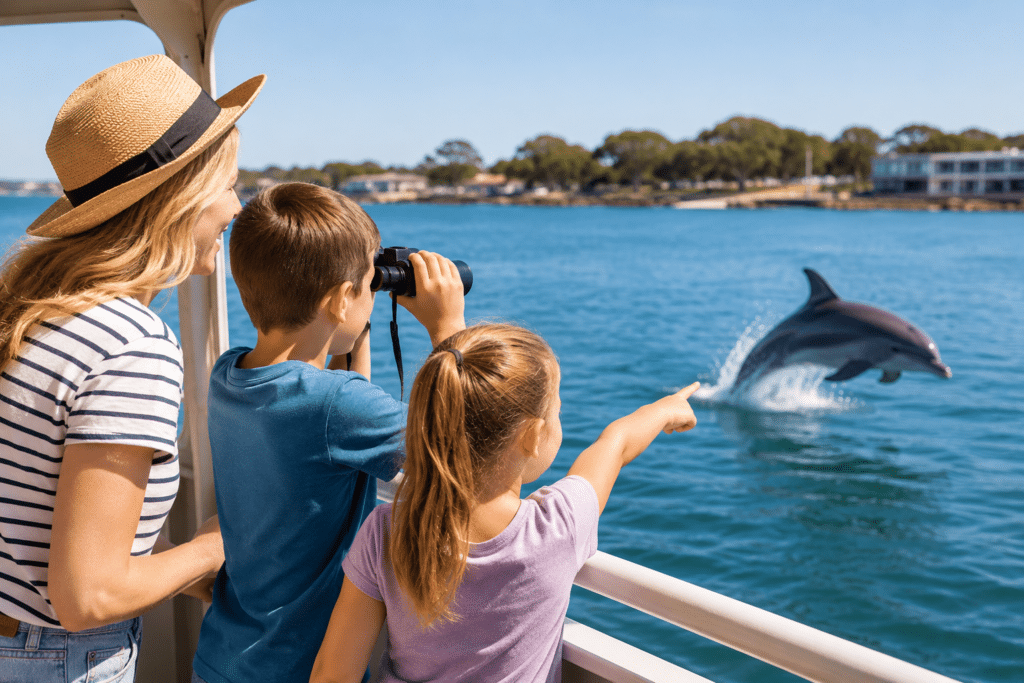
Getting children interested in marine wildlife is one of the best ways to encourage a lifelong appreciation for nature. A dolphin cruise offers the perfect opportunity for kids to experience wildlife in its natural environment, creating memories that are both exciting and educational. Whether you’re planning a family day out in Mandurah or introducing your children to dolphins for the first time, these simple tips can make the experience even more enjoyable. 1. Learn About Dolphins Before Your Cruise Building excitement starts before you even arrive. Spend some time together learning fun facts about dolphins and the marine life found in the Peel-Harvey Estuary. Children love discovering interesting facts, such as: Watching a short documentary or reading a children’s book about dolphins before your cruise helps kids recognise what they’re seeing once they’re out on the water. 2. Turn Dolphin Spotting Into a Game Keeping children engaged is easy when you make wildlife spotting interactive. Create a simple checklist before boarding and encourage kids to tick off everything they see during the cruise. Look for: Children love having a mission, and it encourages them to stay alert throughout the cruise. 3. Encourage Questions Children are naturally curious, and a dolphin cruise is full of learning opportunities. Encourage them to ask questions like: Learning through real-life experiences is far more memorable than reading from a textbook. 4. Bring Binoculars and a Camera Giving children their own pair of binoculars makes them feel like little wildlife explorers. If they have a camera or smartphone, encourage them to take photos of: Taking their own photos helps children become more observant while creating memories they’ll enjoy sharing with friends and family. 5. Talk About Protecting Marine Wildlife One of the most valuable lessons a dolphin cruise can teach is the importance of caring for our oceans and waterways. Use the experience to explain simple conservation habits, such as: Small conversations today can inspire environmentally responsible habits for years to come. A Family Adventure They’ll Never Forget There’s something magical about watching a child see a wild dolphin for the very first time. Their excitement, curiosity and sense of wonder make every cruise a memorable family experience. At Mandurah Estuary Dolphin Cruises, families enjoy more than just sightseeing—they create lasting memories while learning about the incredible marine wildlife that calls Mandurah home. If you’re looking for a fun, educational activity the whole family will love, a dolphin cruise is the perfect adventure. Book Your Family Dolphin Cruise Today Come and discover Mandurah’s amazing dolphins, beautiful waterways and abundant wildlife together. Our friendly team looks forward to welcoming your family aboard for an unforgettable day on the water.

5 Ways to Get Children Excited About Marine Wildlife Read More »

Call Now Button